

Magnetawan, situated in the Almaguin Highlands within the Parry Sound District, comprises two main communities: the Village of Magnetawan and Ahmic Harbour. It's conveniently located just 3 hours north of Downtown Toronto, 45 minutes northeast of Parry Sound, 45 minutes northwest of Huntsville. In the last few years it has become an increasingly popular cottaging area.
The name "Magnetawan" finds its roots in the Native dialect, signifying "swiftly flowing waters." Originally, it was spelled with an extra "a" "Maganetawan." Of significant note, Barbara Hanley, the first woman ever elected mayor of a community in Canada, was born in Magnetawan in 1882.
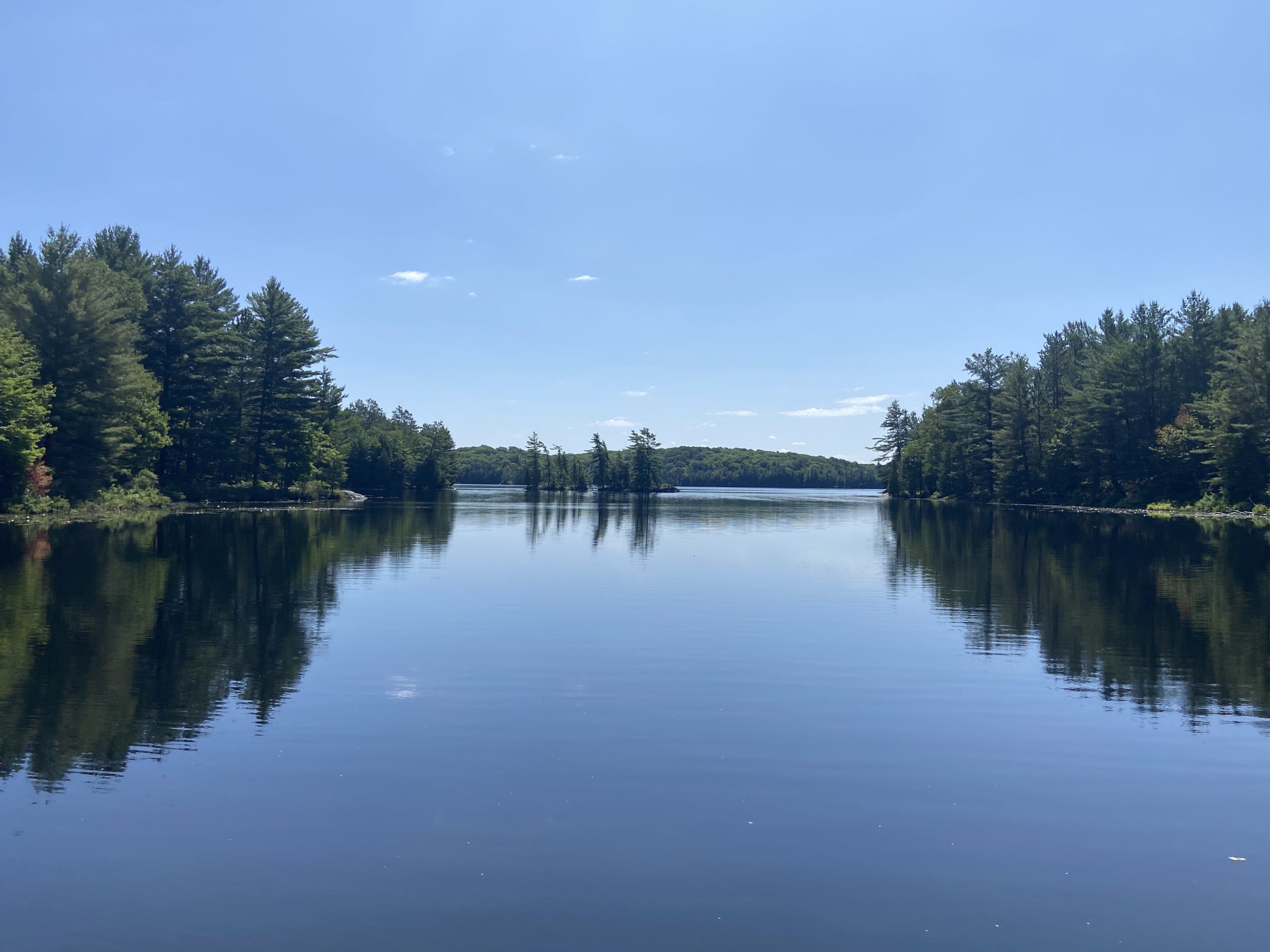
Originating in Algonquin Park, the Magnetawan River meanders its way through lakes, rapids, and waterfalls, eventually reaching Georgian Bay. Ahmic Lake marks the midpoint of this watershed. The lake's waters flow out at Knoepli Falls, a scenic spot to stop just off highway #124. From here you have the opportunity to embark by canoe or kayak and journey down the river all the way to Britt. In the early spring several companies do river rafting adventures on the Mighty Mag starting at Knoepli.
The Steamboat Era
Around 1878, the introduction of passenger boats marked a significant development in Magnetawan's transportation history. The first of these vessels was the "Pioneer" built in 1879 followed by the "Armour," "Wenonah," and later the "Glenada." These boats departed from Burk's Falls and reached Magnetawan around noon, originally making stops at Youngers, Ashdowns, and Ballams landings along the river, as well as Midlothian, Geddes, and Cowans wharf. They also stopped whenever they were flagged down or had cargo to pick up. You can still see the old steamboat stop / boarding house in Magnetawan today, it's located at the bridge on the north side.
During the summer months, boats were the lifeline for transporting mail, merchants' supplies, and tourists. These boats traveled as far as Ahmic Harbour, making stops at various tourist wharves along the lake. There were even moonlight boat excursions which ventured as far as Lake Cecebe and would return to port late into the night. Allen Kennedy served as the first lock master, followed by Frank Stewart, who held the position for an impressive 29 years.
As water traffic in the area continued to increase, there arose a need for a navigational marker in the river to guide vessels entering the locks. Consequently, a lighthouse was constructed. While the original lighthouse was eventually demolished, the year 1995 saw the Magnetawan River Heritage Association take the initiative to build a replica on the very same site. In the winter of 2021 it was badly damaged and rebuilt once again by the Langfords, a local family who have been in the Magnetawan area for generations.
Boat captains navigating the river would signal their arrival to the lockmaster by sounding three distinct blasts on their whistles as they passed by the lighthouse. A nearby resident, Mrs. Nicholson, played a crucial role by lighting a lamp at the lighthouse every evening, contributing to the safety and navigation of the waterway.

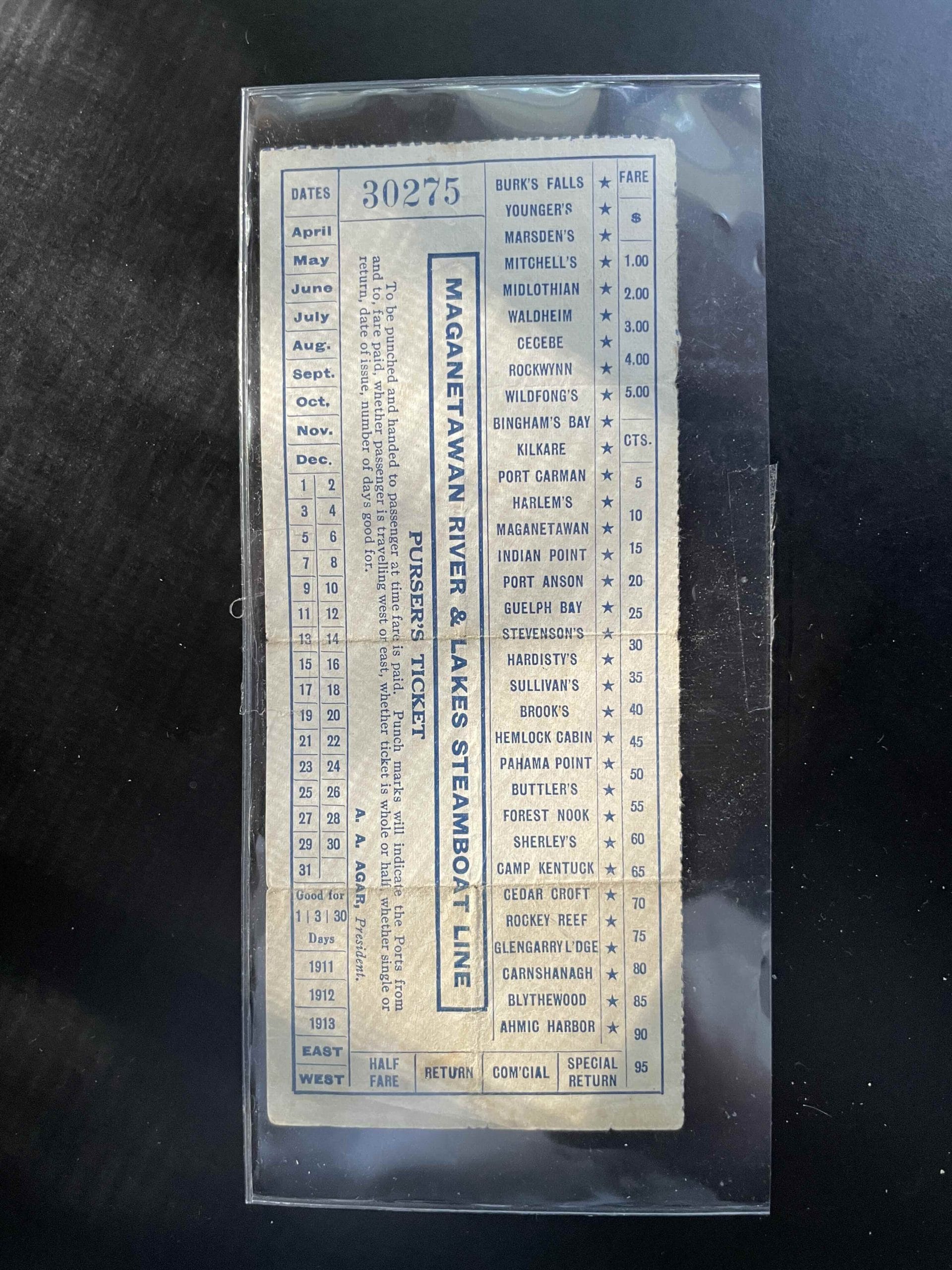
In 1886 construction of the locks at the Magnetawan rapids was completed opening access for boats to reach Ahmic and Neighick Lakes and extending the navigable waterway by another 10 miles. Between 1911 and 1913, The Magnetawan Steam Boat Line had no fewer than 33 stops along the route from Burk's Falls to Ahmic Harbour. Today, only five of the original ports with structures remain: Waldheim, Magnetawan Village Station, Cedar Croft and Glengarry Lodge, now known as Loon Lodge.
The historically significant Waldheim occupies a stunning point on Lake Cecebe and stands out as a truly unique property. Originally designed by an architect as a summer residence in 1904—a rarity for that era and region—it has been meticulously restored in recent years. Today, Waldheim remains one of the lake’s most iconic and recognizable landmarks. Magnetawan Village station has also been largely restored with the original cribbing for the massive dock system still visible through the water.
During the summer months, boats were the region’s lifeline, transporting mail, merchant supplies, and tourists. Steamships traveled as far as Ahmic Harbour, stopping at various tourist wharves along the way. Moonlight excursions were also popular, taking passengers to Lake Cecebe and returning late into the night. Allen Kennedy served as the first lockmaster, succeeded by Frank Stewart, who held the position for an impressive 29 years.
As roadways gradually expanded westward from Burk's Falls toward Parry Sound, reliance on steamships declined. The Mike, the last steamship to serve these waters, was retired around 1934.

The Timber Era
As the road system developed in the early 20th century, Magnetawan began to become even more focused on the forest. There were several large scale commercial maple syrup operations including Crosbies in the Horn Lake area as well as just south of Lake Cecebe. Many of the hemlock groves were cut down not for timber, but for their tannin rich bark which was taken to the tannery in Burks Falls. There were many sawmills scattered throughout the townships almost always near the river as it was the main conduit to move logs. As the timber depleted they slowly closed down but one, the Croziers, which is still in operation today at Rockwyn Landing. Many a home, cottage and barn in the Magnetawan area has been made with Crozier lumber.
There are 5 main lakes in Magnetawan. Ahmic, Cecebe, Horn, Neighick(Beaver) & Whalley along with several smaller ones. Of these, Ahmic Lake & Lake Cecebe were settled the earliest because they were easily accessed. As a result most of the older cottages or "camps" as they were called, can be found there. Many of these historic buildings are still standing with their original boat houses lovingly preserved. One of the interesting facts about the Magnetawan lake system was the early adoption of strict regulation on development. Far ahead of its time, the township strictly regulated the waterfront which saved it from the over-development seen in other areas. It doesn't take a very long boat ride to appreciate the wisdom in this decision. There is also a Magnetawan Watershed Land Trust dedicated to the preservation of the lakes. Their mission is "To preserve the natural, historical, scenic, and recreational value of the Magnetawan River Watershed for the benefit of future generations through land and conservation easement acquisition for the purpose of conservation and stewardship."
The Cottage Era
Although cottaging in the Magnetawan area started in the late 1800s it really began to flourish in the 1950s and 60s as new roads were built and old ones improved. With easier access and much lower construction costs, a new wave of cottagers descended on the area. They generally built modest single story structures many with no running water or electricity. With the addition of submarine power lines running along the lake bed in the late 1970s and early 80s cottages were slowly wired and plumbed and many converted to 4 season. Today, many of those cottages are being torn down and replaced by much larger homes, particularly on Lake Cecebe and Neighick Lake. Most new builds today consist of large 2 story "cottages" generally over 3000 square feet with finished basements. For perspective, many of the original cottages were 500-700 square feet and sat on large stones or piers!
